Lower Eyelid Laxity or Sagging Lower Eyelid Correction with Lateral Tarsal Strip (LTS)
Lower Eyelid Laxity or Sagging Lower Eyelid Correction with Lateral Tarsal Strip (LTS)
Lower eyelid laxity or a sagging lower eyelid may result from weakening or laxity of the structures that support the lower eyelid. This can cause changes in the position of the lower eyelid and lateral canthal area. In some cases, it may affect the overall balance and appearance of the eyes or lead to lower eyelid malposition.
Correction of lower eyelid laxity therefore involves more than simply tightening the skin. Careful assessment of the supporting structures of the lower eyelid is also essential. One of the surgical techniques that may be used to address this condition is Lateral Tarsal Strip (LTS).
What Is Lateral Tarsal Strip (LTS)?
Lateral Tarsal Strip (LTS) is a surgical technique used to improve the tension and stability of the lower eyelid. It involves using a portion of the tarsal plate, an important structural component of the lower eyelid, and preparing it as a tarsal strip. The strip is then secured to the lateral supporting structures of the orbit.
This technique helps provide additional lateral support and stability to the lower eyelid and may help reposition the eyelid into a more appropriate anatomical position.
Lateral Tarsal Strip may be considered in patients with lower eyelid laxity or abnormalities in the position of the lower eyelid and lateral canthal area. The appropriate surgical approach depends on the underlying cause, degree of laxity, and individual periocular anatomy.
Case Study: Lower Eyelid Reconstruction with Lateral Tarsal Strip
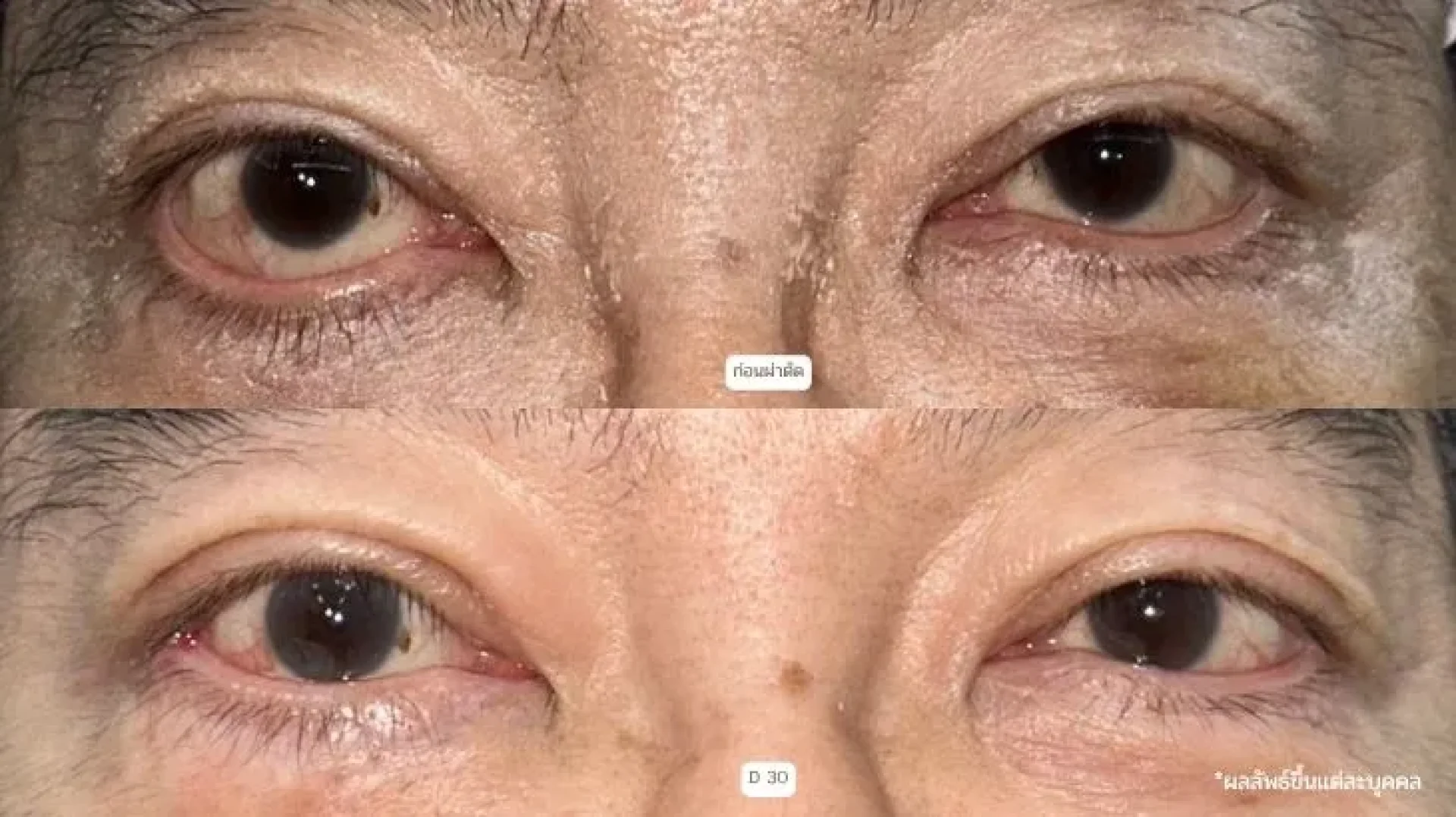
This case involved right lower eyelid reconstruction using the Lateral Tarsal Strip (LTS) technique to correct lower eyelid laxity and improve support of the lateral canthal area.
Following surgery, comparison with the preoperative photographs showed improved tightness and positioning of the lower eyelid and lateral canthal area, resulting in a more balanced appearance of the eye.
However, postoperative results may vary from person to person depending on the underlying cause and severity of eyelid laxity, as well as the individual's periocular anatomy.
How Is LTS Performed?
The general surgical steps may include:
- Assessment of the position and degree of lower eyelid laxity, including the structures around the lateral canthal area.
- Creating an incision at the lateral canthal area to access the structures requiring correction.
- Preparing a tarsal strip from the lower eyelid tarsal plate.
- Securing the tarsal strip to the lateral orbital supporting structure to improve support and stability.
- Adjusting the position and tension of the lower eyelid according to the individual's periocular anatomy.
- Closing the lateral canthal incision while maintaining an appropriate and natural eyelid position.
The specific surgical technique and details may vary depending on each patient's condition and anatomical characteristics.
Lower Eyelid Reconstruction Is More Than Simply Tightening the Skin
Lower eyelid correction requires assessment of the anatomical structures responsible for supporting and maintaining the position of the eyelid. It is not simply a matter of removing or tightening excess skin.
In particular, the lateral canthal tendon and tarsal plate play important roles in maintaining the stability and position of the lower eyelid.
Therefore, when planning lower eyelid surgery, the surgeon should evaluate the degree of eyelid laxity, the position of the lateral canthus, as well as the surrounding muscles, tendons, and orbital structures in order to select the most appropriate surgical technique for each individual.
Who May Be a Candidate for Lateral Tarsal Strip Surgery?
Patients with lower eyelid laxity or abnormalities in lower eyelid position may be considered for Lateral Tarsal Strip surgery. However, LTS is not appropriate for every patient.
The choice of technique for lower eyelid reconstruction depends on the underlying cause of the laxity, the condition and position of the lower eyelid, the lateral canthal tendon, and the overall periocular anatomy.
A thorough evaluation by a specialist is therefore important to determine the most appropriate treatment approach for each individual patient.
Postoperative Results
The goal of surgery is to improve the stability and position of the lower eyelid according to the patient's individual anatomy while maintaining a balanced and natural appearance of the eyes.
The results of lower eyelid laxity correction vary from person to person depending on the underlying cause and severity of the laxity, as well as the anatomy of the orbit, muscles, tendons, and surrounding soft tissues.
Therefore, the decision to perform Lateral Tarsal Strip (LTS) should be based on a detailed assessment of the eyelid and surrounding structures rather than appearance alone.
By Dr. Penake Thongtong
Oculoplastic and Eyelid Surgery Specialist
Disclaimer: The before-and-after photographs shown are from an individual patient case study. Results may vary from person to person. The appropriate treatment approach depends on an individual medical assessment and the patient's specific periocular anatomy.