Revision Surgery for Ptosis and Uneven Double Eyelid Creases After Previous Double Eyelid Surgery
Case Study: Revision Surgery for Ptosis and Uneven Double Eyelid Creases After Previous Double Eyelid Surgery
What Is Ptosis?Ptosis, also known as upper eyelid drooping, is a condition in which the upper eyelid sits lower than normal. It may make it difficult to open the eyes fully and, in some cases, cause the eyes to appear asymmetrical or constantly tired.
There are several possible causes of ptosis, including age-related changes, congenital abnormalities of the levator muscle or its tendon, trauma, and certain types of previous eyelid surgery.
For patients who have previously undergone double eyelid surgery, changes may develop over time. The eyelids may begin to droop, the eyelid creases may become uneven, or the eyes may no longer open symmetrically. A thorough assessment is therefore essential to identify the underlying cause before planning revision surgery.
What Were the Concerns in This Case?
The patient previously underwent double eyelid surgery in 2016. Over time, the upper eyelids began to droop, and the two eyes developed noticeable differences in eyelid opening.The patient's main concerns were:
To achieve more symmetrical eye opening on both sides.
To correct upper eyelid drooping and underlying levator muscle weakness.
To improve the balance and symmetry of the eyelid creases.
To achieve natural-looking eyelid creases without excessive height.
To improve the previous surgical result while maintaining a natural overall eye shape.
After evaluating the eyelid anatomy and levator muscle function, a surgical plan was developed to address the weakened levator mechanism and adjust the eyelid creases. The goal was to improve eyelid opening and create a more balanced appearance between the two eyes.
Revision Surgery for Ptosis in This Case
Correcting ptosis after previous double eyelid surgery can be more complex than performing primary double eyelid surgery.
Previous surgery may leave scar tissue or adhesions within the eyelid, making the underlying structures more difficult to identify and adjust. In some cases, careful release of existing scar tissue may be necessary before repositioning the levator mechanism and refining the eyelid crease.
The objective is not simply to create a more attractive eye.Several factors must be considered together:
Eyelid opening: The ability to open the eyes adequately.
Upper eyelid position: The height and contour of the upper eyelids.
Eyelid crease height: The position and shape of the double eyelid crease.
Bilateral symmetry: The overall balance between the two eyes.
For these reasons, revision surgery should be carefully planned and tailored to each patient's individual anatomy, previous surgical changes, and functional needs.
7 Days After Surgery
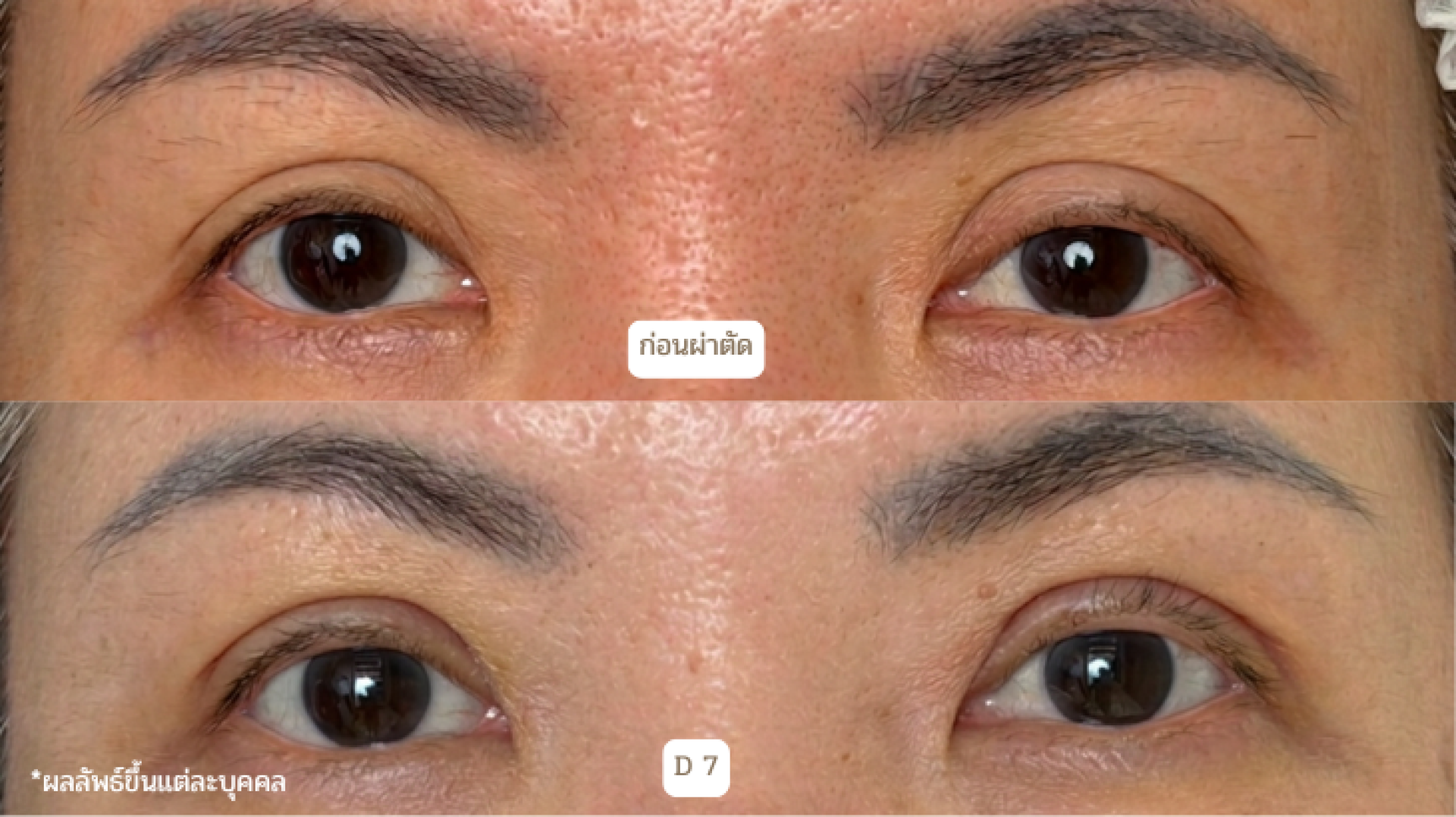
The photographs below show the patient's appearance 7 days after surgery.
At this early stage of recovery, swelling and tightness around the eyelids are still expected, particularly following revision surgery.
The eyelid creases may not yet have settled into their final shape, and swelling may differ between the two sides. Therefore, the appearance during the first postoperative week should not be considered the final surgical result.
Swelling generally decreases gradually as the tissues heal. The eyelid crease and opening may become more clearly defined over time, with further improvement often becoming more apparent at around 3 months. However, recovery varies from person to person.
Important note: Surgical outcomes and recovery times vary between individuals. These photographs were taken 7 days after surgery and do not represent the final result.
Why Can Revision Eyelid Surgery Cause More Swelling?
Revision eyelid surgery may result in more swelling than primary surgery in some patients because the eyelid tissues have already undergone a previous procedure and may contain scar tissue or adhesions.
If additional scar tissue release or reconstruction of the existing eyelid structures is required, the tissues may experience more surgical manipulation, potentially resulting in increased swelling during the early recovery period.
It is important not to judge the final outcome too early. Swelling and temporary asymmetry may occur during the initial healing phase. Patients should allow sufficient time for recovery and attend follow-up appointments as recommended by their surgeon.
Postoperative Care
After stitch removal, warm compresses may be recommended if the surgeon confirms that the incision has healed sufficiently and that this method of care is appropriate.
Warm compresses may help relieve residual swelling and tightness during recovery. However, the appropriate timing, temperature, and duration should be determined according to the condition of the wound and the patient's healing progress.
This is particularly important following revision surgery involving scar tissue release or additional eyelid reconstruction.
Patients should follow the postoperative instructions provided by their surgeon rather than starting warm compresses or changing their wound care routine independently.
Summary of This Case
This case demonstrates the revision of ptosis and uneven double eyelid creases following previous double eyelid surgery.
The patient underwent double eyelid surgery in 2016 and subsequently developed upper eyelid drooping and asymmetrical eye opening. The surgical plan focused on correcting the weakened levator mechanism and refining the existing eyelid creases, with the aim of achieving improved symmetry and a natural-looking result.
At 7 days after surgery, the patient was still in the early recovery phase. Swelling was expected to gradually decrease, while the eyelid position and crease appearance could continue to change as the tissues healed.
This case highlights the importance of an individualized assessment before revision eyelid surgery. The causes of ptosis, eyelid asymmetry, and unsatisfactory results after previous surgery can vary significantly. Careful evaluation of eyelid anatomy and levator function is essential when determining the most appropriate treatment approach.
Dr. Penake Thongthong (Dr. Penake)
Oculoplastic and Eyelid Surgery
D Bangkok Clinic
Frequently Asked Questions (FAQ)
Q: What is ptosis?
A: Ptosis is a condition in which the upper eyelid droops lower than normal. It may interfere with full eye opening and can cause the eyes to appear asymmetrical or tired.
Q: Can ptosis be corrected after previous double eyelid surgery?
A: In selected cases, ptosis can be evaluated and treated after previous double eyelid surgery. However, a thorough examination of the eyelid anatomy, levator muscle function, and any scar tissue from the previous procedure is necessary before determining the appropriate surgical approach.
Q: How long does it take for the results of ptosis revision surgery to settle?
A: Swelling and temporary asymmetry may occur during the early recovery period, particularly after revision surgery. The eyelid position and crease may continue to change as the tissues heal. The results often become easier to assess at around 3 months, although recovery varies between individuals.
Q: Why can revision double eyelid surgery cause more swelling than the first operation?
A: Previous surgery may leave scar tissue or adhesions within the eyelid. If these tissues need to be released or the underlying structures require further adjustment, additional surgical manipulation may result in more swelling during the initial recovery period.
Q: Should I use warm compresses after ptosis revision surgery?
A: Warm compresses may be appropriate after stitch removal if the surgeon confirms that the incision has healed sufficiently. The timing and method should be based on the surgeon's instructions and the patient's individual recovery progress.